
 Back
Back The Heart of Every Beer: A Deep Dive into Brewing Malts
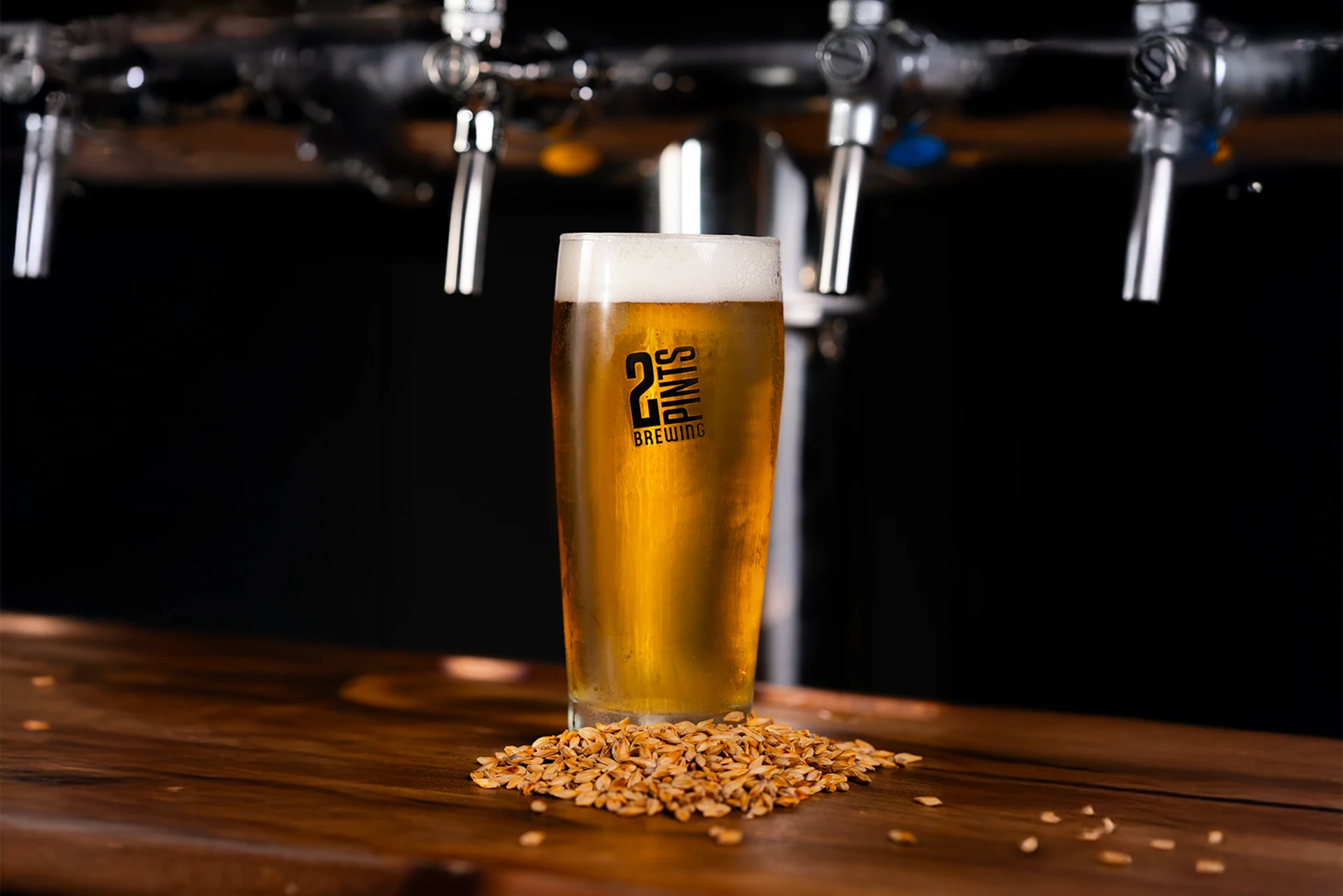
If you’ve ever wondered what gives your favourite beer its colour, flavour, and that satisfying body that makes you reach for another sip, you’re looking at the beauty of malt. Known also as the ‘backbone’ of beer, malt is where the journey from grain to glass truly begins. Let’s take a look into this fascinating ingredient that transforms humble barley (and other grains) into liquid gold.
What Exactly Is Malt?
Think of malt as grain that’s been given a controlled wake-up call. The malting process takes dormant cereal grains—usually barley, but wheat, rye, oats, and others get the treatment too—and tricks them into thinking it’s time to grow. The grain starts to sprout, developing enzymes that will later convert starches into fermentable sugars. Just when things get interesting, the process is halted with heat, leaving you with malted grain packed with brewing potential.
This ancient process, dating back thousands of years, is essentially controlled germination followed by drying. It’s like pressing pause on nature at exactly the right moment to capture maximum brewing power.
The Malting Process: From Grain to Glass
Steeping: The First Soak
The journey begins with steeping, where raw barley takes a long soak in temperature-controlled water. Over 24-48 hours, the grain absorbs moisture, swelling up like tiny sponges until they reach about 45% moisture content in preparation for its next step…
Germination: Controlled Chaos
The soaked grain is then spread out in controlled conditions (around 15-18°C/60-65°F) and allowed to germinate for 4-7 days. During this phase, the grain develops crucial enzymes—particularly alpha and beta amylase—that will later break down starches into sugars during the brewing process. The grain literally starts to grow, developing what’s called the acrospire (the growing shoot inside the kernel).
Kilning: Stopping Time
Just when the grain is getting comfortable with its new growing lifestyle, kilning puts the brakes on everything. Heat is applied gradually, first gently removing moisture, then more aggressively to halt germination and develop flavours. This is where different malt varieties are born—the temperature and duration of kilning determines whether you’ll end up with pale malt, crystal malt, or something much darker like chocolate malt.
Base Malts Explained: aka The Backbone of Beer
Pale Malt (Pilsner/2-Row)
This is the workhorse – pale malts are kilned at low temperatures (around 80-85°C/176-185°F), preserving maximum enzyme activity while developing light colour and gentle, biscuity flavours. They typically make up 70-100% of most beer recipes because they have the enzymatic power to convert not just their own starches, but also help out specialty malts that might be enzyme deficient.
Munich Malt
Step up the kilning temperature and time, and you get Munich malt—it’s slightly toastier than pale malt. It brings more colour too (around 8-10 Lovibond) along with a delicious bread-crust flavour that adds complexity without overwhelming the beer. German brewers have been using it for centuries to add depth to their lagers.
Vienna Malt
Sitting between pale and Munich malts in terms of colour and flavour, Vienna malt offers subtle toasty notes and a gorgeous golden hue. It’s can be found in many Oktoberfest and amber lagers, providing that middle ground between light and dark.
Specialty Malts: aka The Supporting Cast
This is where brewing gets really fun. Specialty malts add specific flavours, colour and complexity to a recipe with each one bringing something unique to the beers profile. Here are some examples…
Crystal/Caramel Malts
A range of beautiful malts that undergo a unique process where the grain is actually mashed while still in the hull, creating sugars that then caramelize during kilning. The result? Malts that add sweetness, body, and incredible flavour complexity ranging from light honey notes to deep raisin and toffee flavours. They also contribute unfermentable sugars, which means they’ll add lasting sweetness to the finished beer.
Chocolate Malt
Don’t let the name fool you—there’s no actual chocolate here, but the deep kilning process creates rich, roasted flavours reminiscent of dark chocolate and coffee. It’s what gives porters and stouts their characteristic dark colour and complex roasted backbone.
Black Patent Malt
The ultimate dark malt, kilned to the point where it’s nearly black and contributes intense roasted, almost acrid flavours. A little goes a long way—even 2-3% can dramatically darken a beer and add that signature stout character.
The Science Behind the Magic: Understanding Malt Chemistry
Enzymatic Activity
The key players here are alpha-amylase and beta-amylase. Alpha-amylase is like the demolition crew, randomly breaking apart long starch chains. Beta-amylase is more precise, methodically snipping off maltose (two glucose molecules stuck together) from the ends of starch chains. Together, they convert starches into fermentable sugars during the mash.
Diastatic Power
This measures a malt’s ability to convert starches to sugars, expressed in degrees Lintner (°L) in the US or Windisch-Kolbach (°WK) in Europe. Base malts typically have high diastatic power (100°L+), while specialty malts often have little to none. This is why enough base malt is needed in a recipe to handle the conversion work.
Colour Contribution
Measured in degrees Lovibond (°L) or Standard Reference Method (SRM), malt colour gives us a scientific way to predict the beer’s final hue. Pale malts clock in around 2°L, while black malts can exceed 500°L. Understanding these numbers helps brewers design recipes that hit the target colour precisely.
Choose Your Malts: The Art of Recipe Design
The 80/20 Rule
Most beer recipes follow a rough 80/20 principle: about 80% base malt providing fermentable sugars and enzymatic power, with 20% specialty malts adding colour, flavour, and character. Of course, rules are made to be broken, and some styles push these boundaries to create something wonderful.
Layers of (Malt) Flavour
As discussed earlier, base malts are the beers core —it’s steady, reliable, foundational. Specialty malts on the other hand contribute distinct notes that blend into a cohesive whole. Too much of any one specialty malt can overwhelm, while too little might not make an impact. It’s a balancing act of malt flavours that all comes together in a chosen style of beer.
Regional Considerations
Different maltsters create subtly different products even when making the “same” malt. British Maris Otter tastes different from American 2-Row, which differs again from German Pilsner malt. These differences reflect local barley varieties, malting techniques, and centuries of tradition.
Storage and Handling: Keeping Your Malts Happy
Malt might seem bulletproof, but it’s actually quite sensitive to its environment. Malts need to be stored in a cool, dry place away from direct sunlight. Moisture is the enemy as it can lead to mold growth and off-flavours. Many breweries invest in sealed, temperature controlled rooms to store malt bags. Airtight storage containers or gamma seal lids for grain buckets are recommended for home brewers and smaller set-ups.
Whole kernel malt stays fresh much longer than crushed grain, so it’s recommended to only mill what is needed on the day of brewing. Pre-crushed malt should be used within a few weeks, while whole kernel malt can last 6-12 months when stored properly.
The Future of Malt
The craft brewing renaissance has driven incredible innovation in malting. Specialty maltsters are experimenting with new varieties, unique kilning schedules, and alternative grains. We’re seeing everything from honey malt to smoked malts made with specific wood types, giving brewers an ever-expanding palette of flavours to work with.
Ironically, ancient grains are making a comeback in modern brewing too—spelt, einkorn, and millets are finding their way more into craft breweries, connecting us to brewing’s deep historical roots while pushing flavour boundaries.
Raise a Pint: The Foundation of Great Beer
Malt isn’t just an ingredient—it’s the foundation upon which every great beer is built. Understanding how different malts contribute to flavour, colour, and body gives a brewer the tools to design better recipes and troubleshoot when things don’t go according to plan.
Whether you’re a homebrewer crafting your next batch or simply a beer lover wanting to understand what’s in your glass, appreciating malt is key to appreciating beer itself. The next time you’re savouring a pint, take a moment to consider the journey those grains took from field to fermenter to your glass. It’s a journey that’s been thousands of years in the making, and we’re all the better for it.
So here’s to malt—the humble grain that makes it all possible. Cheers to the foundation of every great beer!